 EMERGENCY


Generator maintenance in Oklahoma isn't optional. The state's pattern of severe ice storms and brutal summer heat means standby power systems face some of the most demanding conditions in the country, and an unprepared generator during a power outage is worse than no plan at all.
Home Standby Generator Maintenance Checklist
Home standby generator maintenance doesn't have to be complicated. A few quick owner checks, plus one professional service a year, keep your system ready for Oklahoma's ice storms and summer heat.
Weekly: Confirm the generator runs its automatic exercise cycle, and check the controller display for any alerts or error codes.
Monthly: Clear leaves, debris and snow from around the enclosure, and keep the air intake and exhaust vents unobstructed.
Before winter and summer: Test the battery, check the oil level and condition, and inspect the air filter. These are the parts most stressed by Oklahoma's temperature extremes.
Annually: Schedule a professional service that covers oil and filter changes, spark plugs, a battery test, a transfer switch check and a load test to confirm the generator can carry your home's power needs.
Exact service intervals depend on your generator's manufacturer schedule and how many hours it has run. Units that start often during storm season may need service sooner. For a pre-season check by factory-certified technicians, schedule generator service in Oklahoma with Nixon Power Services.
Why Oklahoma's Weather Makes Generator Maintenance Non-Negotiable
Oklahoma's climate doesn't give standby generators a break. Severe ice storms can strain the grid for extended periods, and extreme summer heat pushes electrical infrastructure to its limits. Each of these events demands that your emergency power system starts immediately and runs without fault.
The consequences of a neglected generator during a weather emergency go beyond inconvenience. For vulnerable residents, losing heating or air conditioning during temperature extremes creates genuine health risks. Businesses face real financial exposure when power-dependent operations go dark. Whole house generator maintenance in Oklahoma protects people and assets, not just ensures uptime.
Reliability starts long before a storm hits. Consistent, scheduled upkeep is what separates a generator that starts on demand from one that fails at the worst possible moment.

NFPA 110 Maintenance Requirements Every Generator Owner Should Know
The NFPA 110 standard for Emergency and Standby Power Systems sets the floor for generator care, and it's more demanding than most owners expect.
Weekly inspections are the baseline. According to NFPA 110, owners must check fuel levels, oil, and coolant levels every week. These aren't optional walkthroughs; they're code-required checks that catch developing problems before they become failures.
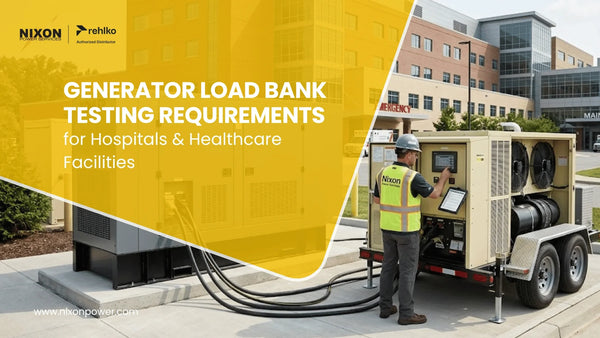
Monthly load testing is where many facilities fall short. NFPA 110 mandates that Level 1 Emergency Power Supply Systems run under load for a minimum of 30 continuous minutes each month. A generator that idles in a parking lot test isn't the same as one that's proven its output under real electrical demand. That load test exercises the transfer switch, confirms the exhaust system is clear, and validates that the unit can actually carry its rated load.
Annual service goes deeper. A comprehensive annual service typically includes load bank testing to confirm full output capacity and a thorough review of the fuel system and overall mechanical condition. For facilities subject to local Authority Having Jurisdiction oversight, annual service records are often required documentation.
Seasonal Maintenance: Matching Service to Oklahoma's Temperature Extremes
Oklahoma's temperature swings are wide enough that a one-size-fits-all maintenance schedule leaves gaps. Seasonal generator care for extreme weather means adjusting the service approach twice a year.
Winter preparation centers on cold-start reliability. Oil viscosity matters here: lower-viscosity oils like 5W-30 are often recommended for extreme cold winter starts, because thicker oil resists flow at low temperatures and increases cranking load. Getting the engine ready to fire in freezing conditions requires attention to both the fuel system and the mechanical components most stressed by cold.
Summer preparation shifts the focus to sustained thermal performance. Engine oil viscosity shifts in the opposite direction; 10W-30 or 15W-40 grades are better suited for hot-weather operation because they maintain film strength at high engine temperatures. Portable generator maintenance in Oklahoma during summer should also account for the added wear that heat places on engine components over extended run times.
Skipping these seasonal adjustments doesn't just reduce reliability; it shortens engine life and raises the probability of failure precisely when demand peaks.
Professional Generator Maintenance Services vs. DIY Checks in Oklahoma
Visual walkthroughs have value, but they have hard limits. AHJ compliance documentation, load bank testing, fuel system diagnostics, and transfer switch verification require certified professionals with the right equipment and credentials. A facility manager checking fluid levels is doing useful work; they're not conducting an NFPA 110-compliant annual service.
Nixon Power Services fields over 130 factory-certified service technicians across a 14-state territory, including Oklahoma, as of July 2026. Technician dispatch and field service tracking run through TaskBridge, an in-house operations software platform that gives the team real-time visibility into service schedules and equipment history.
The technician pipeline is maintained through Power School, an 8-week hands-on training program that requires no prior experience. That structured preparation means every technician arrives with standardized, practical knowledge rather than inconsistent on-the-job training.
For mission-critical facilities, that consistency ensures a reliable service agreement.
Standby Generator Upgrades and Service Options for Oklahoma Businesses
Seasonal generator maintenance helps improve reliability, but aging equipment may eventually require upgrades or replacement. Businesses and facilities should evaluate their current power requirements, equipment condition, and future load demands before expanding standby capacity.
Rehlko (formerly Kohler Energy) offers scalable generator solutions for commercial and industrial applications, including the KD Series range designed for critical power needs. Selecting the right system depends on factors such as facility size, electrical load requirements, and site conditions.
For government agencies and eligible organizations, cooperative purchasing programs such as Sourcewell can help simplify equipment procurement. Nixon Power Services provides generator solutions, maintenance support, and service options across its territory, including Oklahoma.
Pricing is quote-based because each project depends on equipment selection, installation requirements, and site-specific conditions. For generator maintenance, upgrades, or service inquiries in Oklahoma, contact Nixon Power Services or its 24/7 emergency response line at 888-826-4966.